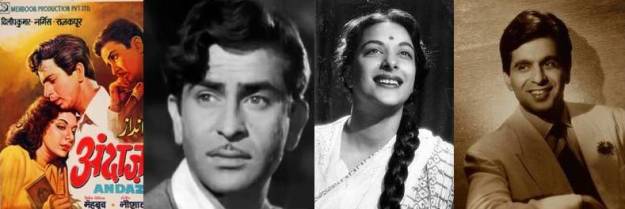
When I was a child, I used to hate art movies. I always wondered how could anyone like such boring movies, which had no story, no dance or songs, no action scenes. And strangely, such movies got National awards! I always doubted some sort of foul play behind the jury decision. Of course, my favourite movies and artists did get the Filmfare awards, but then why not National awards? I always blamed it on cheating, which was my word for corruption. When I got older, I obtained the wisdom that boring movies get National awards whereas exciting (and hence good) movies get Filmfare awards! When I was in my late 20s, somehow I decided to take another look at some of these boring stuff of Indian cinema. I started with Paar, then Trikaal, Chakra and so on. And hell, I was so annoyed at myself! How could I have not liked such movies earlier! These movies and the various artists therein are real gems. How have I missed them all these years! And then there was no looking back. I explored further and tried to watch as many Indian art movies as I could find. Though I did like the narrative and the way it unfolded, and the skills of the people involved in making such artwork, somehow I always had a feeling that I was missing something more subtle. What is the grammar of art — as one of my seniors once asked me — the basic set of rules which makes any creative work a piece of art? I did not have an answer then, and even today I am exploring the answer to that question. Continue reading


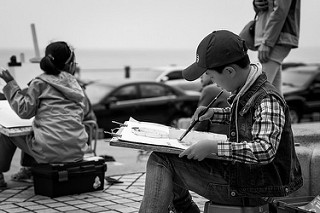 There are two parts of any artistic pursuit — one is skill and the other is art. As you might have guessed, art is the soul of the work whereas skill lends an aesthetic appeal to the piece of art. It is just like the body which lends a basis for the human soul to live in — without body the soul cannot stay; yet, without soul, the body has no value.
  It is said that a classic is a book which has never finished saying what it has to say. Admirers and followers of the Gita say the same thing, i.e., even after years of study and analysis, every time someone reads the scripture, new meanings and messages come out of it. It is always fresh, always new. I do not oppose this assertion, and my only concern has always been that Indians have always considered Gita as a symbol or a label, to take oath in courts, as a token to prove their religious nature, truthfulness, attachment to duty and so on. Very few people ever take the trouble to open it and see what actually is written on those pages. Treatment of Gita is no different from that of Swami Vivekananda — the moment children or youth open their messages, their parents become afraid that they are going to become monks! And of course, parents’ own desires and ambitions are attached to the children, so why would they allow that to happen?
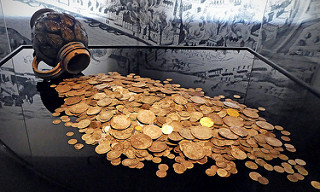 Today I’m feeling very light. In fact, very very light. Today I was finally able to take off that burden from me. Let me be specific. A huge pile of coins had accumulated and it was indeed getting more and more difficult to store them. Of course, I couldn’t keep them in my wallet nor in the pocket of my trousers. For some time I kept them in my bag, but the load kept increasing. Have you seen the calendars sold during Dussera and Diwali? You remember that pile of gold coins in front of Lakshmi ji? Same thing here. I segregated them into smaller piles of Rs 5, Rs 10 and Rs 2 coins and put them in different boxes. Once I discussed this problem with a local shopkeeper and he happily agreed to change them with notes. So today I got rid of all the coins.
  Pradyot