Image source: Wikipedia
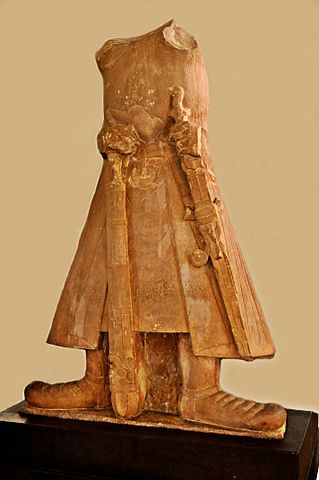
In a story published in Bengali magazine Anandamela, a child used to boast about the various precious items in his grandfather’s house. His friend remarked, ‘Who knows, if he searches carefully, he may even find Kanishka’s head!’
Kanishka’s head — one of the several unsolved problems in Indian history. I hesitate in calling it a ‘mystery’ because there is no mysterious element or secrecy as such. So if you are expecting something sensational, you might be disappointed. The problem is a very simple one, and is most probably due to missing links and lost history. Some day someone may find valuable information that would bring the missing pieces together and complete the picture. Till then, we would have to wait.
 A well known publisher once expressed his concern about the declining reading habit these days. He seemed to be extremely worried and started a discussion on Facebook asking how to encourage reading habit. Some people gave very good input. The discussion was over in a few days — the usual lifetime of any Facebook post. However, couple of months later, the publisher posted the same query once again! This time nobody replied to him.


 Routine annual inspection of our school went well and smoothly. After the education inspector left, the teacher asked our class –


 I have always wondered whether the English word ‘nano’ has its origin in the Gujarati word nanu (નાનું = small) — the similarity is indeed remarkable. To explore the idea further, I opened the Merriam Webster dictionary and found that it is not so. The English word ‘nano’ has its origin in the Greek word nanos, meaning ‘small’ or ‘dwarf’.
  Pradyot