Tag Archives: English

It’s High Time Journalists Became More Sensitive And Sensible

owl

Source: Flicker

This post is about NDTV journalist Pallava Bagla who is in news for last few days for all the wrong reasons. A lot has already been said on this episode; in fact, Twitter is on the verge of explosion considering the number of tweets shared on this news. It really brings delight to see the fervour and passion that my countrymen are carrying in their hearts. I am particularly happy to note that we have started looking beyond Tendulkar and Shahrukh Khan for people and institutions that bring us together. In the response given to Pallava Bagla, we have at least found something which is not controversial and everyone — barring a few — thinks in the same way. It is a rare sight these days. Continue reading
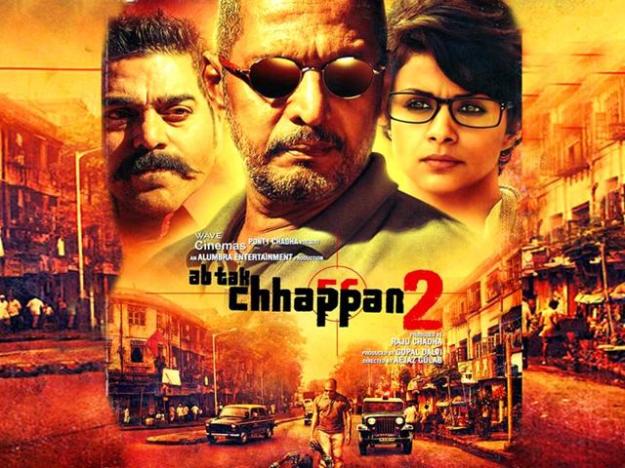
‘Ab Tak Chhappan 2’ Showed Two Physicists . . . Incongruous, But A Welcome Change

1321190_Wallpaper2

Image source: Hindustan Times

Ab Tak Chhappan is an important movie in filmography of Nana Patekar. In this movie he is depicted as an honest and tough police officer. The dramatic turn of events and Nana Patekar’s handling of them demonstrate the extent he could go to uphold his values and sense of duty. Given the success of this movie, no one was surprised when its sequel Ab Tak Chhappan 2 was released. In this movie, he was called by the state home minister Vikram Gokhale to ‘clean’ the city of its criminal elements. However, all is not what it seems; Nana Patekar has his moment of disillusionment, and he decides to set things right in his own way. I am not going to write a review of either of these movies. My interest is in a particular scene where Vikram Gokhale tells Nana Patekar how the latter was used for Gokhale’s political ambitions. This scene was a turning point in the movie and built up the climax of Ab Tak Chhappan 2. Continue reading

Book Review: ‘Your Brain, Explained: What Neuroscience Reveals About Your Brain and its Quirks’ By Marc Dingman

BrainExplained

Image Source: Amazon

You may call me a slow reader; after all I took about three months for writing my last book review. But I am satisfied with my reading speed. In my opinion, it is highly improper not to give non-fiction books the effort and careful reading they demand and deserve. Non-fiction books, especially science books, are not meant for speed reading, and active involvement of the reader is essential to derive maximum benefit from the work. Following this argument, I am completely satisfied at having taken two full months in going through the book Your Brain, Explained: What Neuroscience Reveals About Your Brain and its Quirks by Marc Dingman. The title of the book speaks for itself and honestly speaking, I expected nothing less than 6 months of drudgery and mental torture while undertaking this seemingly Himalayan task. The book itself is not lengthy, being 256 pages long; however, it was the subject which scared me to death. But all my apprehensions turned out to be baseless fears of an empty mind. The book is educational in nature and far easier to follow than I had anticipated. The language of the book is neither too dull nor too exciting; it is simply modest and polite, and very easy to understand. Continue reading

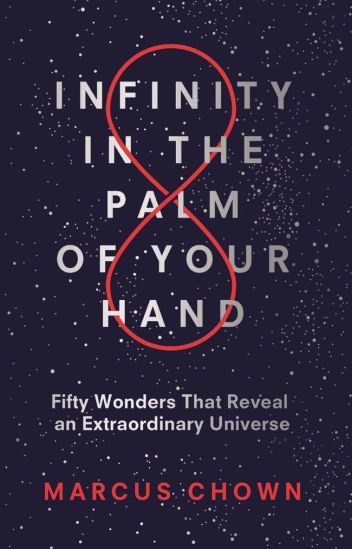
Book Review: ‘Infinity In The Palm Of Your Hand: Fifty Wonders That Reveal An Extraordinary Universe’ By Marcus Chown

Infinity

Image Source: Amazon

Today I would share my views on the book Infinity In The Palm Of Your Hand by Marcus Chown. This is the first popular science book that I am reviewing on this blog and the second book by Marcus Chown that I have read. I got acquainted with Marcus Chown through his book We Need To Talk About Kelvin, which explained the scientific concepts behind everyday events and processes that we take for granted. I was so impressed with that book that when Infinity In The Palm Of Your Hand was offered to me for review, I grabbed it with both hands. Continue reading

Book Review: ‘Autumn Shadows: Memoir’ By Tomichan Matheikal

Matheikal

I am writing to you after a short gap. The reason is that I was busy reading Tomichan Matheikal’s new book “Autumn Shadows: Memoir” and it was very difficult to interrupt the reading to pen down any of my own thoughts. So I decided to first finish the task at hand and then share my views with you. No, it was not a pleasure reading, instead I was reading it in order to review it as a critic. So today I would share my thoughts and opinion of this book with you. Continue reading

Most Of Your Reasons For Not Pursuing Art And Literature Might Be Just Excuses

art-music-1

Photo source: artist.com

In couple of previous articles, I have touched on the subject of role of arts in our lives and society. How is art capable of bringing about that change within ourselves is a subject for psychological and philosophical scrutiny. We will discuss it in detail some other time. It is generally assumed that in order to pursue art, one requires financial security and time. Having spent four decades actively pursuing arts, two decades science, and one decade languages, today I sincerely believe that that is not the case. Continue reading

It’s Time To Show Concern For Science

In the run-up to general elections 2014, one leading newspaper carried an op-ed article where the writer wondered how each and every party was harping promises of overall progress, prosperity and development, but none of them said even a single word on how it is going to achieve it. To clarify his point, he elaborated that no party has spoken about science and technology. How can any country progress if not by science and technology, he asked.

Continue reading

An Assignment For Physics Lovers From 15 Park Avenue

15ParkAvenue

Photo source: Amazon.in

In a country obsessed with politics and religion, it is quite rare to see any movie paying attention to science and scientists — that too fine attention. 15 Park Avenue (2005) by Aparna Sen is one such movie, which had received the National Film Award for best feature film in English.

I liked this movie for several reasons besides its screenplay and artistic merit. The foremost reason is that it brings nearly all my favourite actors and actresses under one roof — Shabana Azmi, Konkona Sen Sharma, Waheeda Rehman, Soumitra Chatterjee, Kanwaljit Singh, Rahul Bose, Dhritiman Chatterjee to mention only a few. And all of them performing under the expert direction of Aparna Sen who has shown her calibre more than once with movies such as 36 Chowringhee Lane (1981),  Yugant (1995), Paromitar Ek Din (2000) and Mr and Mrs Iyer (2002). What more could one ask for? Continue reading

How Important Is Voice In Onscreen Depiction Of Argument?

38826798015_01afdec473

photo credit: Tambako the Jaguar Tiger argument via photopin (license)

For the last four posts, I have been discussing portrayal of conflicts in Hindi classic movies. In my opinion, these scenes offer us some real treasures of Indian drama. Today I will talk about something elementary. How does conflict start in the first place? I agree that this is a deep question which falls within the areas of philosophy and sociology. However, here we need not go into much detail, instead mention only main steps of interpersonal conflicts. First, there is a clash — of ideas and opinions, of dreams, ambitions, preferences and so on. We try to resolve such conflicts through dialogues,  which are most often biased. We try to persuade the other person to move away from our path. When the other person does not follow, we try to convince him by logic and arguments. When that also fails, we try to show authority, strength, power, and in such way step by step the conflict takes higher notes of argument ultimately transforming into verbal duel followed by physical assaults. Continue reading

When Shabana Azmi And Smita Patil Share Screen Space, The Result Is Sheer Magic!

Mandi

Shabana Azmi and Smita Patil with Soni Razdan in a scene from Mandi (1983), a yet another Shyam Benegal masterpiece. Photo source: TheQuint.

I will continue with my discussion on film appreciation based on onscreen depiction of conflicts. In the previous two parts of this series, I highlighted the different styles employed by actors to portray the characters they were playing. In the second part, I discussed geometry, inclination and orientation in a scene. I also mentioned importance of the 1/3 rule and the leading lines. Hope you remember those details. Otherwise it is a good idea to brush up your memory by revisiting those articles because discussion in this article and all forthcoming articles depends heavily on the concepts outlined in previous articlesContinue reading